How Donor Sperm Addresses Infertility?
In the US, infertility is often viewed as a woman’s issue in pop culture. People incorrectly assume that if a couple is struggling to conceive, female reproductive issues must be the sole cause of any potential problems. The truth, however, is a very different story. According to the research in the US, a third of all infertility cases are solely because of male reproductive issues. Sometimes the cause is known, such as a history of medical conditions that impact reproductive health. For some men, unexplained infertility is another possibility. When this diagnosis is uncovered, situations might arise where a fertility specialist might recommend using donor sperm to conceive.
What is unexplained infertility?
Infertility in men usually centers around a few specific concerns. In most cases, sperm quality and quantity tend to be the biggest issues that prevent a man from getting a woman pregnant. The most common factors include health conditions or physical abnormalities that can directly influence reproductive health. For example, an individual who struggles with erectile dysfunction may find that natural conception is incredibly difficult. Similarly, a man who underwent cancer treatment in the past may find that sperm quality and quantity were adversely impacted by chemotherapy or radiation therapies. When a clear, defining cause can’t be found, a fertility specialist will diagnose that individual with unexplained infertility.
Unexplained infertility and IVF
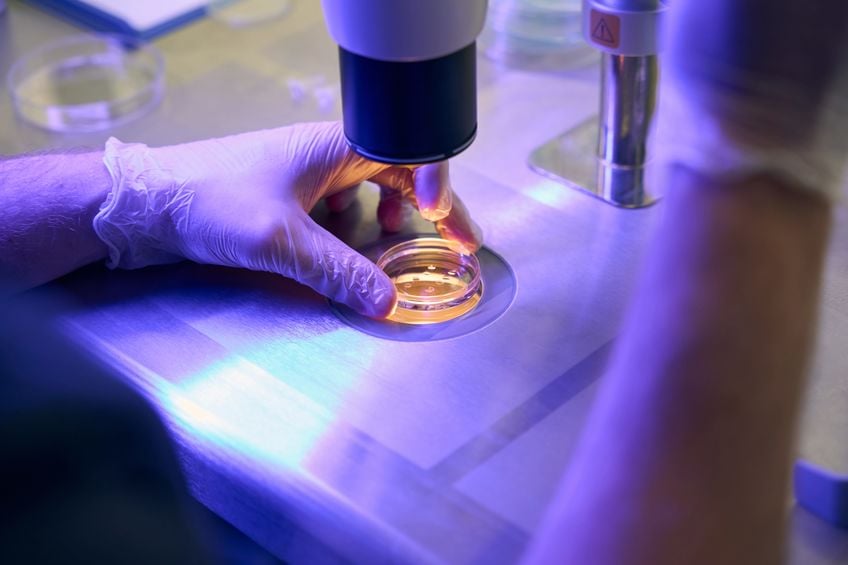
Not every case of unexplained infertility is treated the same. For example, if a man discovers that a low sperm count is present and simply supplementing hormones doesn’t correct the problem, a specialist might recommend intracytoplasmic sperm injection (ICSI). The process focuses on inserting a single sperm directly into an egg and can be incorporated into an in vitro fertilization (IVF) cycle. In this scenario, the man’s own sperm would be used, but the process for collecting a sample might vary.
Sperm extraction alternatives
Similarly, in situations where providing a semen sample manually is difficult, interventions are possible to extract semen or sperm in a clinical setting. For men with testicular or prostate blockages or difficulty ejaculating, experts might recommend one of several extraction solutions, such as testicular sperm extraction (TESE), which essentially biopsies tissue that contains sperm, or percutaneous epididymal sperm aspiration (PESA), which can directly remove semen from ducts in the penis via a needle.
When multiple rounds fail
As long as a man doesn’t suffer from sterility, where no sperm is being produced, a fertility clinic will usually pursue a few cycles using the couple’s own material before shifting to other methods. After a few failed attempts, a specialist may talk with a couple, recommending that the two consider using donor sperm to improve conception odds.
The case for donor sperm
A variety of factors can make using donor sperm more attractive for couples attempting IVF or even other forms of assisted reproductive technology (ART). If a man is diagnosed with azoospermia, or a complete absence of sperm, then using donors becomes a requirement rather than an option. If a partner has severe genetic disorders or very poor semen quality, not using the individual’s semen is the best option. Additionally, repeated previous failed fertility treatments would also make the couple a good candidate for using donors. In all of these cases, a specialist can discuss the pros and cons of using donor sperm and what to expect during the process.