Can Asherman’s Destroy Pregnancy Hopes?
For women with Asherman’s syndrome, a condition characterized by scar tissue forming inside the uterus, conception can be a challenge. Statistics show that about 1.5% of women evaluated with a hysterosalpingogram (HSG) for infertility have the condition. The risk of Asherman’s is significantly higher in women with a previous dilation and curettage (D&C) and women who have experienced recurrent miscarriages. Due to adhesions and scars, the uterine cavity can be partially or completely blocked, preventing natural implantation. Asherman’s syndrome can be devastating for women or couples hoping to achieve pregnancy and start a family. Even with the help of in vitro fertilization (IVF), a healthy uterine lining is still required for optimal embryo implantation. With the right approach, women with Asherman’s syndrome can achieve pregnancy success with the use of in vitro fertilization.
How Asherman’s affects fertility
The uterine lining plays an important role in pregnancy by having the right shape and optimal thickness. Progesterone and estrogen help the lining to thicken and prepare for early pregnancy. With Asherman’s syndrome, scar tissue disrupts this process by reducing the available space for implantation and limiting blood flow. Some adhesions also change the shape of the uterine cavity, making embryo implantation physically difficult. In more severe cases, the lining may not respond properly to hormonal signals, leading to a thin endometrium or absent menstrual cycles. These issues can lead to implantation failure, recurrent miscarriage, or difficulty achieving pregnancy. Even using the highest-quality embryos during IVF will be ineffective if Asherman’s syndrome is present.
Diagnosis and treatment
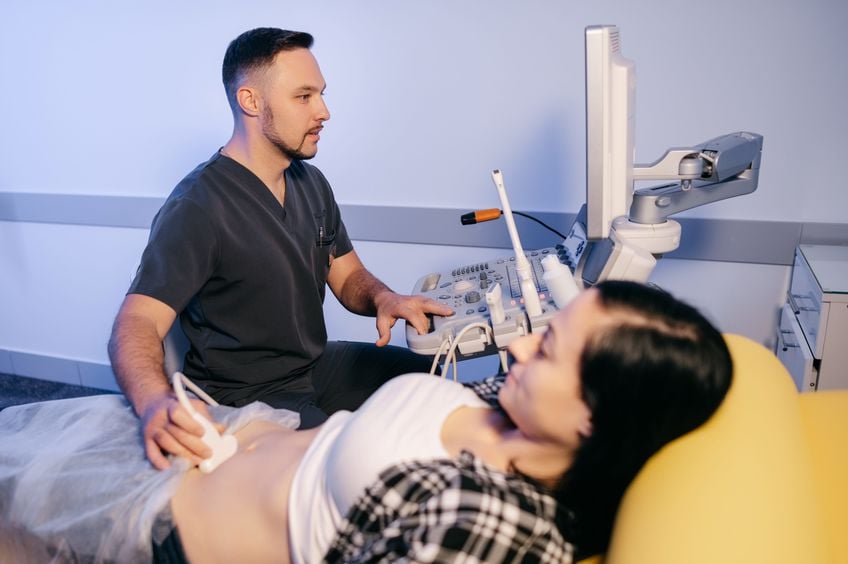
Accurate diagnosis is the first step to overcoming Asherman’s syndrome. Women may present with symptoms such as lighter periods, missed periods, infertility, or repeated IVF failure. Diagnosis involves imaging, HSG, or hysteroscopy. These procedures allow direct visualization of the uterine cavity, enabling physicians to assess the location, extent, and severity of scar tissue. Treatment involves using minimally invasive surgery (MIS) to remove scar tissue with specialized instruments. The goal is to restore the normal shape of the uterine cavity while preserving healthy endometrial tissue. In more complex cases, multiple procedures may be required to remove adhesions fully and prevent recurrence. Successful surgery can create a more favorable environment for embryo implantation.
Optimizing for IVF
After the adhesions are treated, the goal is to support healing and prevent recurrence. The uterus is particularly vulnerable during the healing phase, and without proper care, scar tissue can form again. Some doctors may recommend a balloon catheter to keep the walls separated. Additional hormone therapy or strategies, like platelet-rich plasma (PRP), can also help stimulate regrowth of the endometrial lining and improve tissue repair. Once the uterine cavity is restored, which can take several weeks, the focus shifts to preparing the endometrium for embryo transfer. After healing, the fertility team may recommend a combination of estrogen and progesterone hormones used over time to optimize the endometrial lining. Careful monitoring, often through ultrasound and hormone testing, helps determine if the patient is now ready to attempt IVF.
Success after Asherman’s syndrome
With surgery and treatment to reduce the development of scar tissue, many women with Asherman’s can attempt IVF and go on to achieve a successful pregnancy. A multidisciplinary approach is required to achieve success. Surgery and healing are the start, with hormone therapy helping to optimize the uterine lining. As each patient is different, the fertility team optimizes treatment and hormones to improve outcomes. A diagnosis of Asherman’s Syndrome can feel like a setback. At the same time, addressing the condition directly, healing patiently, and attempting IVF can provide a clear path to implantation success.