
Advanced Technology For Complex Infertility
Modern science continues to expand the possibilities for conception in couples facing infertility. However, in certain cases, getting pregnant remains a challenge. Advanced reproductive technology (ART) now offers targeted solutions for individuals with difficult-to-treat infertility who have not achieved success with conventional treatments such as intrauterine insemination (IUI) or fertility medication. By combining laboratory innovation with personalized care, ART offers new hope to couples navigating complex fertility challenges.
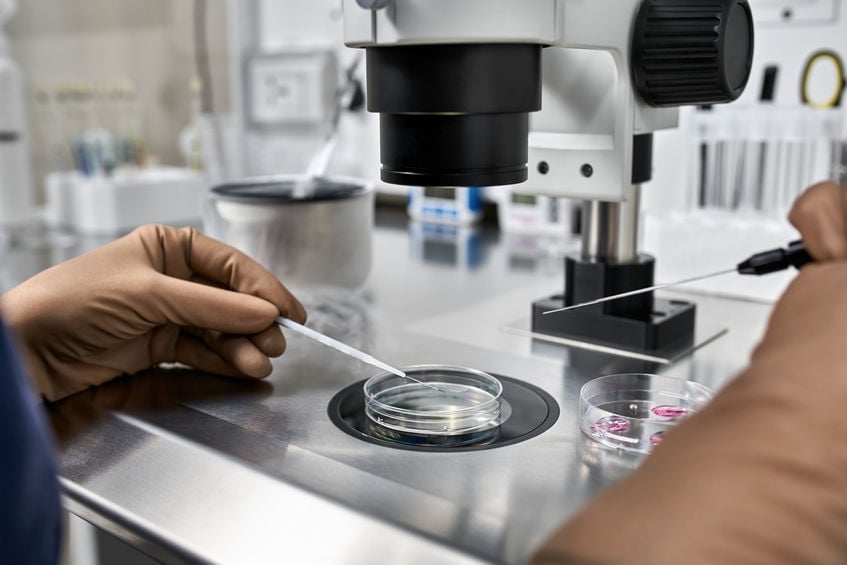
The foundation of advanced care
In vitro fertilization (IVF) remains the cornerstone of ART. With IVF, mature eggs are retrieved from the ovaries and then combined with sperm in a lab to create embryos. After a few days, the strongest embryo is transferred into the uterus in hopes of pregnancy. IVF allows specialists to directly observe fertilization and early embryo development, revealing issues that may not be detectable with other approaches. For many couples with unexplained infertility, blocked fallopian tubes, or severe male-factor infertility, IVF provides the most effective path to pregnancy.
ICSI helps overcome sperm challenges
Intracytoplasmic sperm injection (ICSI) is a significant breakthrough in reproductive medicine and a great option for more challenging infertility cases. This technique involves injecting a single healthy sperm directly into an egg to achieve fertilization. ICSI is often recommended when sperm count, shape, or movement is severely impaired, or when previous IVF cycles have failed to produce viable embryos. The method greatly increases the chances of fertilization, allowing couples with male-factor infertility to achieve pregnancy sooner.
Genetic testing improves embryo selection
Preimplantation genetic testing (PGT) allows embryologists to examine embryos for chromosomal abnormalities before transfer. This process identifies the embryos most likely to implant and develop into healthy pregnancies, reducing the risk of miscarriage and genetic disease transmission. PGT is especially beneficial for older women, couples with recurrent pregnancy loss, or individuals with known inherited genetic conditions. Incorporating PGT into IVF cycles can provide greater confidence in embryo selection and improve success rates.
Donors offer renewed possibilities
When egg or sperm quality prevents conception, donor eggs or sperm can provide an effective path forward for achieving pregnancy. Donor options are often recommended in cases of diminished ovarian reserve (DOR), premature menopause, or severe male-factor infertility. Using donor eggs or sperm allows fertility specialists to create healthy embryos through IVF, greatly improving the chances of success even after previous failed cycles. Each donor is carefully screened for medical and genetic conditions, ensuring safety and compatibility. For many hopeful parents, donor eggs or sperm offer a powerful solution when other treatments have not led to pregnancy.
Innovation advances hope
For men and women facing challenging fertility barriers, advanced reproductive technology transforms what once seemed unattainable into an achievable reality. Techniques such as IVF, ICSI, and PGT continue to evolve through research and innovation, offering higher success rates. Each advancement strengthens the promise that even difficult-to-treat infertility can be met with effective, science-driven solutions, allowing hopeful couples to build a dream family.