The Delicate Balance Required For Implantation
Getting pregnant might seem like a straightforward task, but in reality a series of events needs to occur to go from trying to conceive to a bouncing bundle of joy. Hormone levels need to be within the right range, the egg needs to be healthy, sperm need to have sufficient motility and minimal DNA damage, and most importantly, the resulting embryo needs to successfully implant in a woman’s uterine lining. If the lining is too thick or thin, implantation isn’t successful, resulting in failure. One specific issue that can arise is adenomyosis.
An optimal environment
Research has shown that there is a goldilocks range of ideal uterine lining thickness which is most likely to support implantation. Based on a study of 96,000 embryo transfers during in vitro fertilization (IVF), researchers found that live births were more likely to result from transfers with an endometrial lining between 10 and 12mm thick. By contrast, linings under 6mm has the lowest live birth outcomes. However, issues with endometrial lining and quality will influence implantation which can result in failed pregnancies.
Adenomyosis
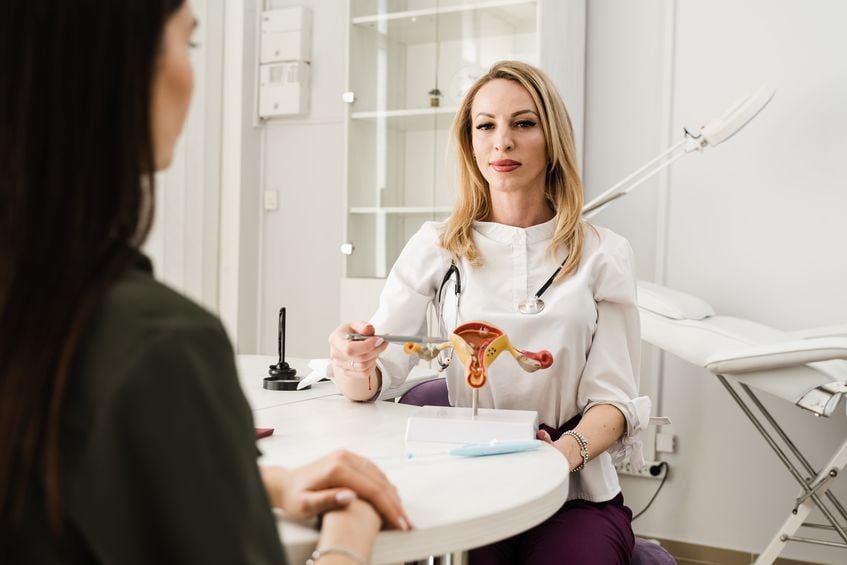
Adenomyosis is a condition in which the endometrial lining which builds and sheds with the menstrual cycle actually grows into the muscle wall of the uterus. While the root causes are unknown, experts do know that the condition usually resolves after menopause. Most women who experience adenomyosis may experience heavier, painful periods. In some cases, hormonal treatments can correct the problem although some people may need a hysterectomy or removal of the uterus for full relief.
Adenomyosis and implantation
Not only does adenomyosis lead to heavier, more painful periods, but the condition can also influence conception. Specifically, the problem can also change the shape and structure of the uterus, and also cause inflammation. Both of those side effects can prevent embryo implantation. Likewise, adenomyosis can impact uterine contractions and sperm movement which are two central requirements for natural conception through intercourse.
Conception outlook
Getting pregnant with adenomyosis isn’t impossible but can be a harder process for women with the diagnosis. In many cases, getting pregnant naturally may not be likely, meaning that people will need to turn to assisted reproductive technology (ART) treatments like IVF. Yet, not every woman with the condition will struggle to conceive. Research suggests that if a person has adenomyosis but doesn’t have symptoms, fertility outcomes are more positive.
Know the risk
Adenomyosis can be a disappointing diagnosis to receive, but isn’t a closed door on fertility. If a woman has been diagnosed with adenomyosis, speaking with a fertility specialist is the best option. From getting tested to determine outcomes, as well as even considering alternative pathways to conceive such as using a surrogate, options do exist.