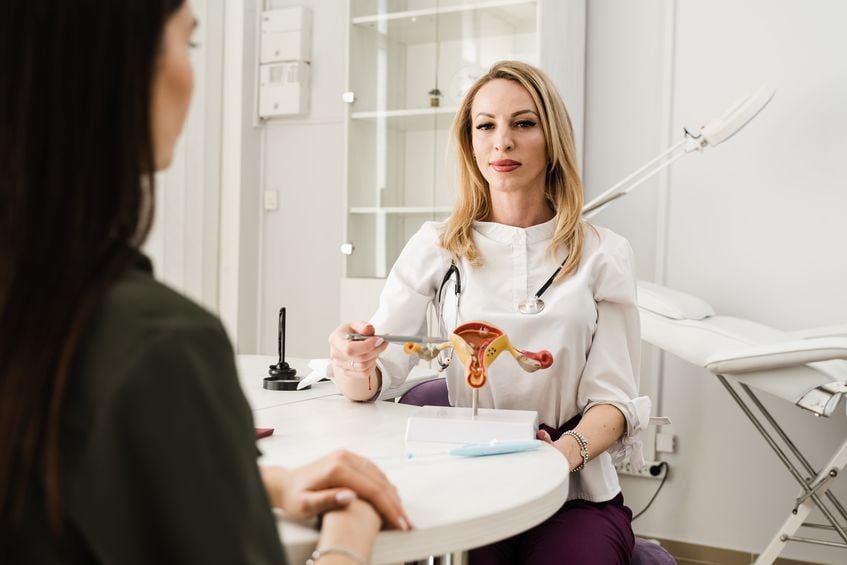
When A Routine Exam Reveal More
Regular visits with an obstetrician/gynecologist (OB/GYN) cover everything from birth control to pregnancy to menopause. While many appointments focus on prevention and routine care, more complex issues that affect the ability to conceive can arise. Certain diagnoses may appear during routine exams, imaging studies, or discussions about menstrual cycles. Many fertility challenges begin with subtle symptoms that initially seem unrelated to reproduction. Early identification of underlying conditions allows for timely treatment and improved fertility planning.

Irregular ovulation disorders
Menstrual cycles that occur infrequently or unpredictably often signal ovulation problems. Polycystic ovary syndrome (PCOS) is a common cause of irregular ovulation. Hormonal imbalance associated with PCOS may prevent the regular release of an egg, which can result in difficulty conceiving. Symptoms of PCOS can include irregular periods, acne, excess facial hair, or changes in weight. To make a diagnosis, the OB/GYN will review the patient’s menstrual history and any associated symptoms, recommend hormone testing, and order a pelvic ultrasound. Together, this information can help paint a clear picture.
Is your pain endometriosis?
Affecting an estimated 10% of reproductive-age women, endometriosis develops when tissue similar to the uterine lining grows outside the uterus. Common locations include the ovaries, fallopian tubes, pelvic walls, and surrounding organs. Many patients report painful menstrual periods, chronic pelvic discomfort, or pain during intercourse. Inflammation from misplaced tissue can create scar tissue and adhesions that affect reproductive organs. OB/GYNs may suspect the condition based on symptoms, imaging findings, or surgical evaluation.
Blocked tubes
Healthy fallopian tubes play a crucial role in natural conception. Tubes provide the pathway where sperm meets the egg and fertilization occurs. Infections, prior pelvic surgery, or untreated inflammation can sometimes lead to tubal blockage. Blocked tubes prevent sperm and egg from meeting, preventing fertilization, and making pregnancy much harder to achieve. An OB/GYN will often perform a hysterosalpingography (HSG) to visualize the fallopian tubes and identify any blockages.
Uterine structural conditions
Certain structural changes within the uterus may interfere with embryo implantation or pregnancy development. Uterine fibroids are benign growths that sometimes distort the uterine cavity. Endometrial polyps may also occupy space in the uterine lining and disrupt implantation. Some individuals are born with uterine shape variations that influence reproductive outcomes. Ultrasound or specialized imaging helps physicians identify these structural concerns.
From diagnosis to direction
Seeing an OB/GYN for routine care is a great way to stay on top of reproductive health. If any underlying fertility issues, such as irregular ovulation, endometriosis, or a tubal blockage, are present, early identification can make a big difference. Many female fertility issues can be treated with minimally invasive procedures, restoring fertility. In other cases, assisted reproductive technologies (ART) like in vitro fertilization (IVF) can help. With an accurate diagnosis, hidden fertility barriers can be addressed, increasing the chances of pregnancy.